
The Great Immigration Reset: 6 Surprising Shifts in South Africa’s New Migration Strategy
1. Introduction
For years, anyone who has dealt with Home Affairs knows the score: moving into or out of South Africa was a bureaucratic ordeal. The system was defined by literal mountains of paperwork, inconsistent adjudications, and a technological infrastructure that felt stuck in the previous century. Because the laws governing citizenship, immigration, and refugees were essentially written in silos, they rarely functioned as a cohesive whole. This fragmentation didn't just frustrate legitimate applicants; it created an environment where the system could be gamed, leaving the Department of Home Affairs (DHA) drowning in a staggering backlog of unresolved cases. We are now, however, looking at the most significant overhaul of these regulations in decades.
A new policy roadmap, the "Draft Revised White Paper on Citizenship, Immigration and Refugee Protection," is effectively starting from scratch. Having watched the DHA struggle with these legacy issues for years, I see this as a fundamental pivot toward a more sophisticated, merit-based model—one that prioritizes what a person actually contributes to the country. This isn't just a bit of administrative tinkering; it is a total rethink of how South Africa manages its borders. The goal is to turn migration into a strategic lever for economic growth while simultaneously tightening national security.
2. Shift 1: Earning Your Spot—The End of "Time-Served" Citizenship
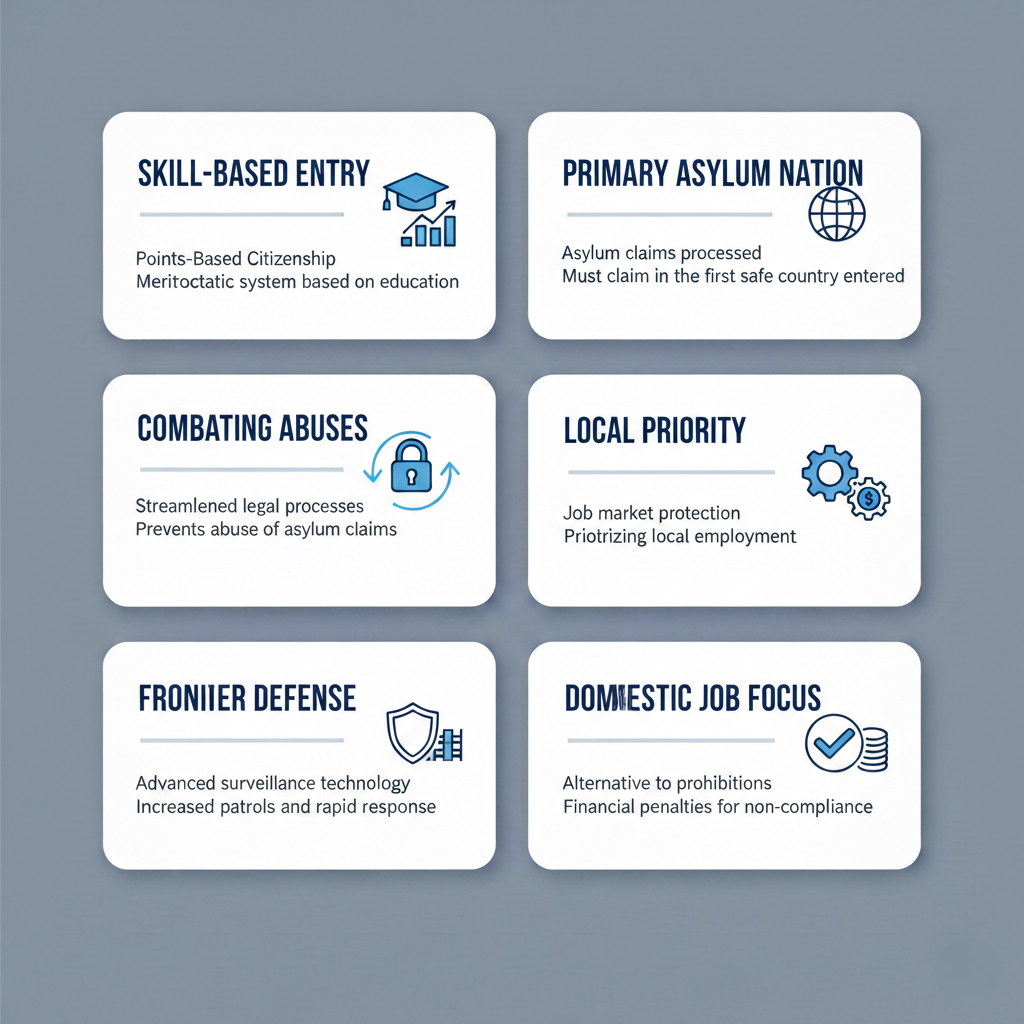
The core of this overhaul is a reimagining of how a person qualifies for South African citizenship. Historically, becoming a citizen was largely a matter of patience—a "waiting game" where residency was the primary metric. If you lived here long enough, you eventually became eligible. The new proposal scraps that passive approach in favour of a Points-Based System.
Under this meritocratic structure, citizenship is no longer a participation trophy for residency. Instead, it will be reserved for those who can demonstrate they are helping the country move forward. The government intends to weigh factors such as education levels, specialized professional skills, and overall economic contribution. They are looking to prune away outdated laws that they feel no longer serve the national interest. To facilitate this, the department is introducing two high-priority visa categories: a Skilled Worker Visa for specialized talent, and a Start-Up Visa for entrepreneurs looking to build businesses on South African soil. Minister Leon Schreiber has been clear: this is about choosing talent based on objective value rather than simply counting the years on a calendar.
3. Shift 2: Closing the "Early Retirement" Loophole
This focus on active contribution explains why the Retired Person Visa has come under such intense scrutiny. When the government finally audited the data for this category, the findings were a wake-up call: nearly 65% of applicants were under the age of 55, with some even in their mid-twenties. It became glaringly obvious that many were using this visa as a "side door" to enter the country and work without the hassle of securing a proper work permit.
To shut this down, the new plan introduces two practical fixes. First, they want to set a hard minimum age so that you actually have to be a retiree to qualify. Second, they plan to significantly increase the financial requirements, ensuring that applicants have a substantial bank balance or pension fund. These changes are meant to guarantee that those arriving on this visa can genuinely support themselves without entering the local job market. By tightening these screws, the government wants to ensure the visa serves its original purpose and stops being a shortcut for those trying to bypass more rigorous work visa requirements.
4. Shift 3: The "First Safe Country" Rule for Asylum Seekers
The government is applying a similar level of scrutiny to humanitarian protection. South Africa is fundamentally shifting its stance on refugees by adopting the "First Safe Country Principle." Put simply, if you are fleeing your home country and pass through another safe nation on your way to South Africa, you will no longer be eligible for asylum here. The expectation is that you should seek refuge in the first safe territory you reach.
This policy is a direct move to stop "asylum shopping," where individuals cross multiple borders specifically to reach a country with better economic prospects. To make this legally binding, the government is planning a complex diplomatic manoeuvre: withdrawing from the 1951 UN Refugee Convention and immediately re-joining it with specific reservations. They are taking this path because our courts have previously ruled that South Africa must provide refugees with a full suite of services, including employment, healthcare, and education. The government’s stance is that the national fiscus isn't bottomless, and the country can no longer afford to provide these services to every arrival without a more selective screening process.
5. Shift 4: A Digital Backbone—The Smart Population Register
Managing these complex new rules requires a massive leap in infrastructure. The plan is to replace the aging National Population Register with a brand-new "Intelligent Population Register." While the old system was a relic of manual entries and fragmented data, this new version is designed to act as a central digital hub. It uses artificial intelligence, machine learning, and real-time data to track everyone within the system.
This digital overhaul provides the foundation for a National Digital ID and, importantly, Electronic Travel Authorisation. This means every foreign national in South Africa will be required to have fingerprints and facial scans digitally recorded, regardless of their status. While the goal is to eliminate identity fraud and bring order to the records, it represents a massive technical challenge. It will be a true test of whether the Department of Home Affairs can manage high-level technology while keeping sensitive personal data secure from cyber threats.
6. Shift 5: Sector Quotas and Local Priority
The logistical power of this "digital brain" is also being directed toward a specific economic goal: ensuring migration patterns match the needs of the South African workforce. This is a central pillar of the strategy to get the economy moving again, with the priority being that jobs go to local citizens whenever possible.
There are three main parts to this. First, the Minister of Employment and Labour will set strict quotas on foreign workers in four sectors: agriculture, hospitality, tourism, and construction. Home Affairs will act as the gatekeeper, ensuring they don’t issue more visas than those quotas allow. Second, there will be "no-go zones" for foreign nationals, preventing them from starting small businesses in certain protected sectors. Finally, any company hiring a foreign specialist must present a concrete "skills transfer" plan, proving how that person will mentor a South African worker to eventually take over the role. It’s a difficult balancing act between attracting global talent and addressing our high unemployment rate.
7. Shift 6: Fines Over Bans—A Pragmatic Approach for Business
While the government is getting tougher on entry, they are also becoming more pragmatic regarding those already here doing business. One of the most significant changes involves how the state handles visa overstays. Currently, even a minor administrative error or a late filing can lead to a person being banned from South Africa for five years. As many have discovered, overturning that ban is a legal process that is both expensive and exhausting.
For international companies that move staff across borders, the new plan is a major relief. Instead of jumping straight to a five-year ban for minor overstays, the government wants to allow people to pay a fine when they re-enter the country. This change removes a massive amount of red tape for HR departments and global firms. It’s a win for the state as well; they collect the revenue and, more importantly, clear the backlog of legal appeals. This allows officials to stop chasing minor paperwork mistakes and focus on individuals who actually pose a threat to security.
8. Conclusion: The Road Ahead
With these updates, the South African government is sending a clear signal: the era of migration based simply on "showing up" is over, and the era of "contribution" has begun. This is a massive, ambitious plan that seeks to modernize everything from border security to the very definition of citizenship.
The public has until 15 February 2026, to weigh in on these proposals. As these concepts move toward becoming law, the real question remains: are the government’s digital systems and departmental offices actually ready to handle this "merit-first" future?